There ought to be a word for it, the experience of your favorite out-of-the-way spot—a dive bar, a hidden pocket of urban greenery—being discovered by the crowds. Which, inevitably, it will be. It was like that for me with Port Royal, South Carolina. When I lived nearby in Savannah, I liked to drop in for coffee and a stroll through Port Royal’s central park: a sleepy wetlands preserve with a boardwalk, a few lazy alligators, an egret or two pecking through the muck.

I moved from the area nearly five years ago, and it took me that long to return to Port Royal. This past June, I was driving past and decided to stretch my legs. Stepping out of the car, I noticed the difference immediately. The park was shockingly crowded. It was incredibly noisy. And, truth be told, it smelled awful.
The birds had found it.
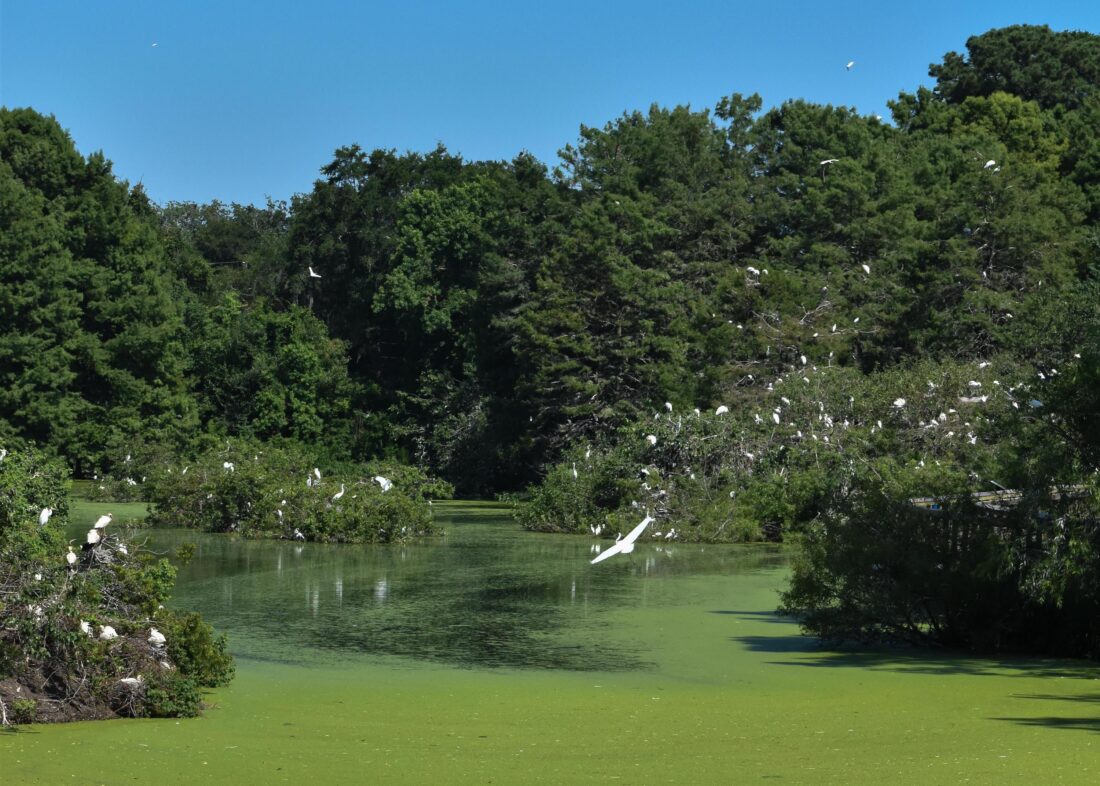
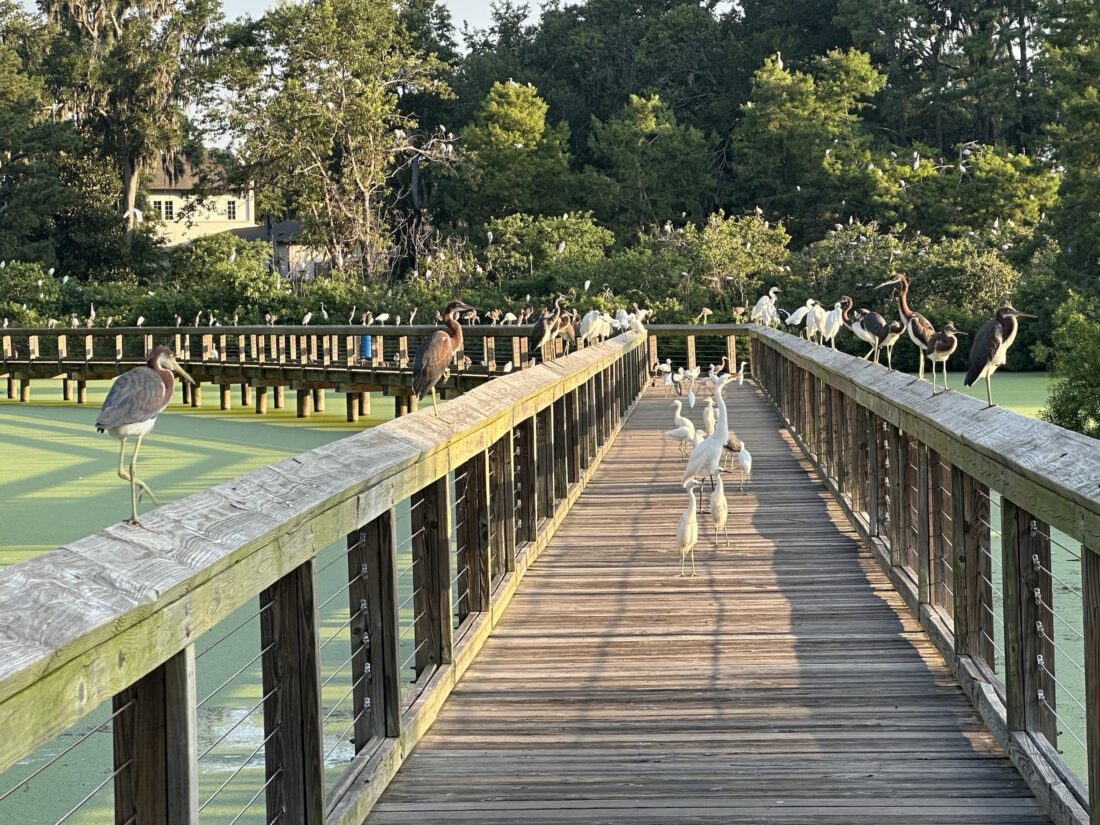
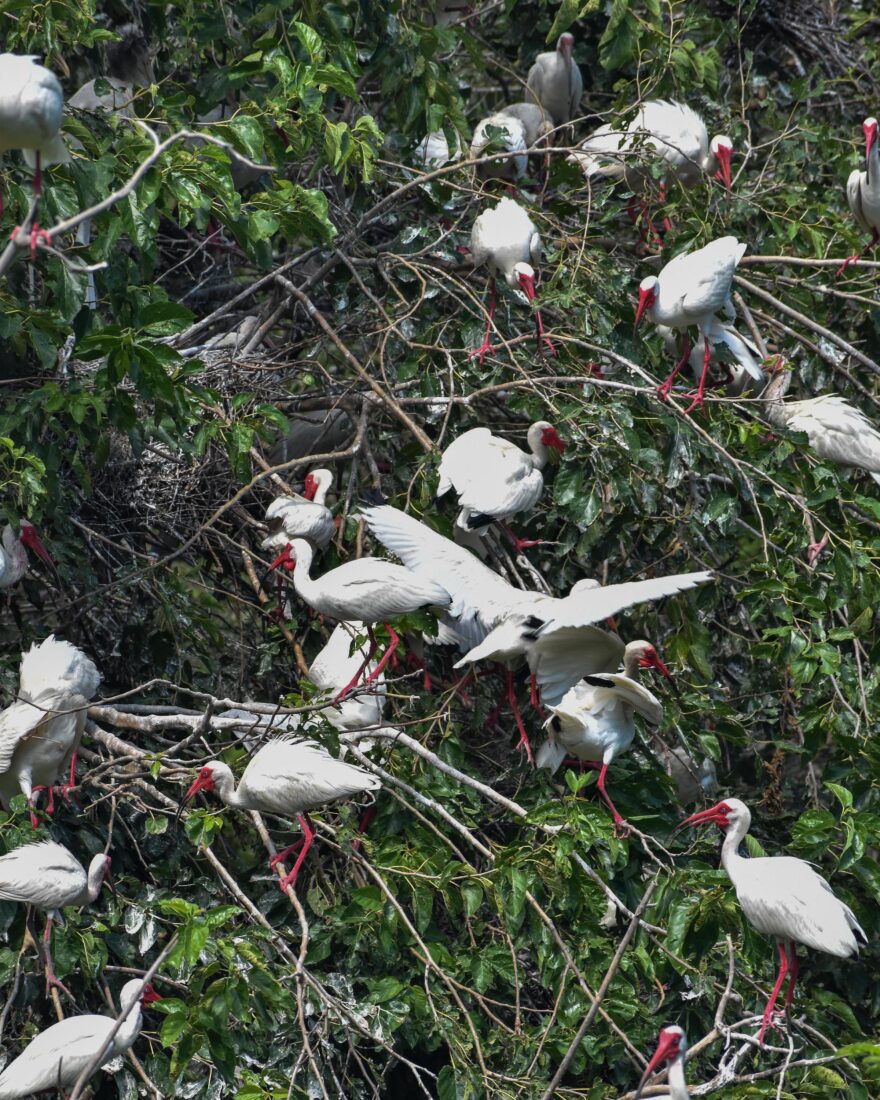
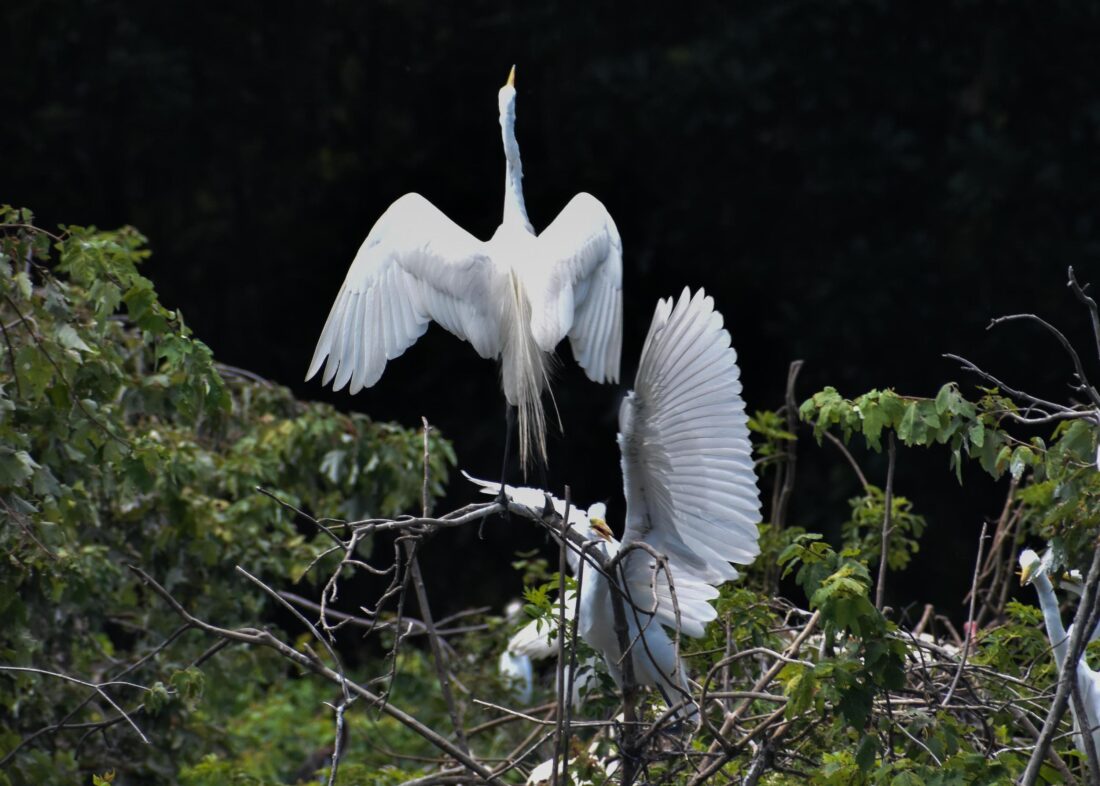
Herons, egrets, ibises, wood storks. Hundreds of them, weighing down every branch of every cypress tree growing on the islands in the middle of the water. On the boardwalk, spectators gawked at this feathered metropolis—its residents squabbling in their nests, feeding their young, trying out their wings. I overheard a kid say to his mom: “That alligator is eating a bird!” Sure enough, I looked to the far shore just in time to see a gator with its jaws open wide to accommodate one very unlucky anhinga.
It turned out I was witnessing the fruits of a long-term restoration project. In the early 2000s, the town of Port Royal decided to take a connected series of stormwater retention ponds and turn them into an avian refuge and a birders’ paradise. It worked spectacularly—it’s just that it took a while. The initial phase of the Port Royal Cypress Wetlands and Rookery was completed in 2010; by May 2013, a survey found a couple hundred birds there. But the space wasn’t being actively managed. “Natural features that man has put their fingerprint on, a lot of times, it’s just like a house,” says Dean Harrigal, a wildlife biologist involved in the project. In other words, it requires some upkeep.
The species here fall into the category of colonial nesting wading birds. To nest successfully, they need protection from mammalian predators—the kind offered by, for instance, an island. The park’s initial construction involved building islands in the wetlands. But over time, swamp loosestrife and other vegetation grew so thickly they essentially created a bridge on the water, “such that a raccoon can just walk right across it, then get up in the trees, and then it’s just a smorgasbord for them,” says Travis Folk, who works with Harrigal at the wildlife consultancy Folk Land Management. A May 2017 survey recorded only fifteen birds in the preserve.
So in 2018, Port Royal reengaged Folk Land Management, whose founder—Travis’s father, Robert Folk—was involved in the refuge’s original design. Contractors returned to tear out unwanted foliage and add another island. The water was drained for the work to be conducted; when they added it back in 2021, results were swift.
“We reflooded it in January,” Harrigal explains, “and by mid-March we started seeing nesting activity.” But 2025 was when it “really exploded”; a count this year found 800 nests on the twelve-acre property. (“That’s why it was noisy and smelly,” he adds.) In a recent report, Harrigal suggested the wetlands might be “at or near carrying capacity.” The first birds to nest at a given site will grab the prime terrain—in this case, the islands. When Harrigal and his colleagues saw nesting activity spilling over to the opposite shoreline—less attractive real estate, avianly speaking—it indicated that room might be running low. Now Harrigal, who joined Folk Land after a long career with the South Carolina Department of Natural Resources, will oversee regular maintenance of the wetlands to keep them from getting overgrown again.
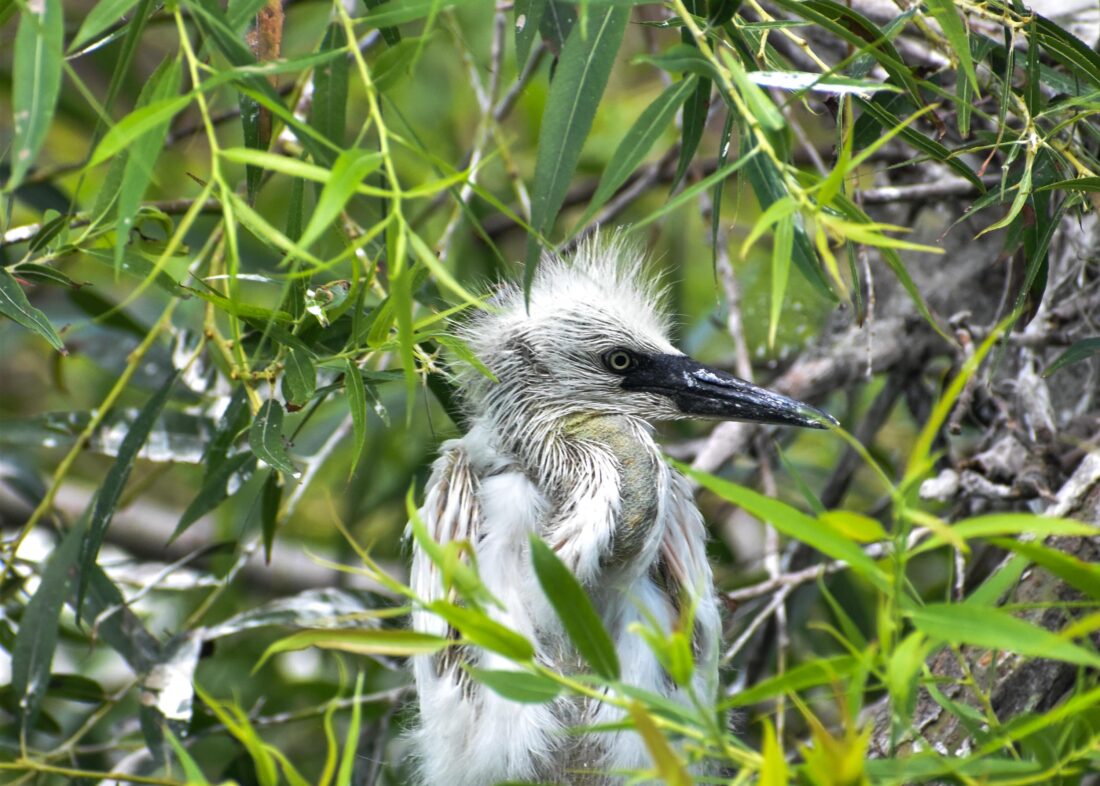
That’ll occur mostly in fall and winter, when the birds aren’t nesting. The best time to see them is spring and summer, especially between Easter and Memorial Day and particularly in the evening, says Scot Clark, president of the Friends of Port Royal Cypress Wetlands. Formed in 2019, the group has installed interpretive signs along the trail and offers regular free tours with master naturalists. “During the day, all the birds kind of scatter,” Clark says. “But in the evening around dusk, they all start flying in—just hundreds upon hundreds of birds that flock to the area for roosting overnight.”
A couple months after my stop in Port Royal, I happened to visit another natural place I’ve loved for a long time but hadn’t seen in a while: a leafy glen in a town where I used to live in Southwest Ohio. Formerly, its centerpiece was a quiet creek that overspilled its banks during the rainy spring, but I returned to find that this occasional floodplain had become permanently flooded. Beavers had performed a gut rehab, taking a tiny waterway and transforming it into a wide, green swamp.
Again I walked around in awe—on new boardwalks, as the old trails are long gone, and in a place whose very dimensions I no longer recognized. I thought about solastalgia, a word coined by the philosopher Glenn Albrecht to describe the sense of loss provoked by environmental change. Shorter winters, a childhood beach washed away by rising seas: Albrecht called solastalgia “the homesickness we feel while still at home.” Here, though, and in Port Royal, I experienced something like solastalgia’s opposite. I remembered that things can improve, even in just a few short years—that some changes can make a home feel even more like itself.