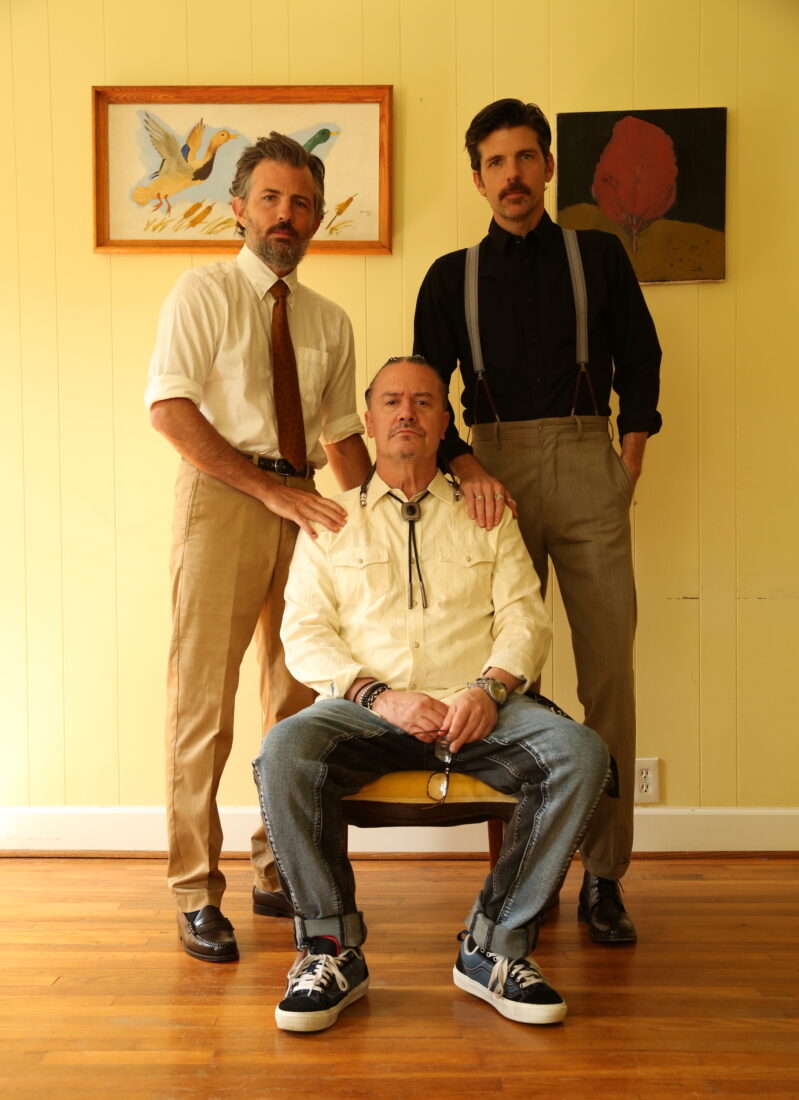
Let’s just say a collaborative album between the Avett Brothers and Mike Patton was not on our 2025 bingo card. Patton is best known as the frontman of Faith No More (remember this?) and experimental rockers Mr. Bungle, two bands that both Scott and Seth Avett have said were major influences on the duo while they were growing up in North Carolina.
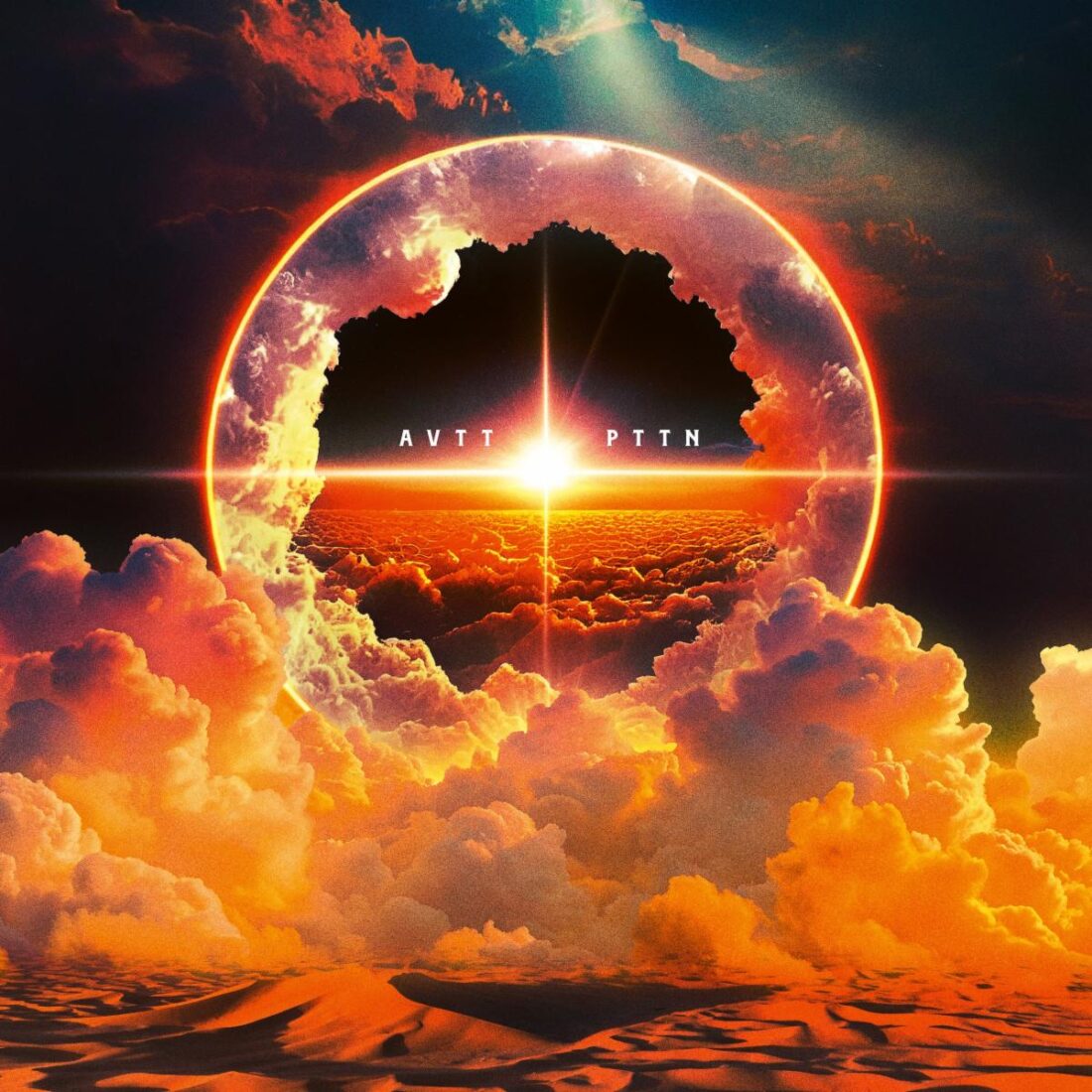
So does the new project, AVTT/PTTN, work? It does. The opening tracks, “Dark Night of My Soul” and “To Be Known,” would fit on any Avett Brothers album. Then things take an interesting turn on “Heaven’s Breath,” with a fuzzy, crunchy guitar lick leading into blazing riffs, spooky sound effects, and towering vocal theatrics. But it’s on “Too Awesome” where everything clicks: Though they come from different backgrounds and different sides of the country (Patton is a native of Northern California), the trio’s sense of drama and sweeping grandeur binds them together. Patton’s piercing baritone—a little Waylon, a little Tom Waits—gives the brothers’ trademark harmonies additional heft. This is daring, cinematic music that reveals itself more fully with each subsequent listen. It should also be played as loud as possible.
Scott Avett says he can’t remember who gave him Patton’s number, but the bond was instantaneous once they started texting. “There was no filter, no agenda,” Scott says. “It felt very personal, which is what I’m always looking for.”
We caught up with Scott and Mike to talk more about how the collaboration came about, the benefits of working remotely, and what might happen when they bring these songs to the stage. AVTT/PTTN is out this Friday and available for pre-order here.
Scott, we’ve talked through the years, and early ’90s rock was a massive influence on you guys growing up. It’s not as if you were just listening to Bill Monroe.
Scott Avett: Yeah, absolutely. I didn’t grow up knowing any Bill Monroe, or any bluegrass for that matter. What was really interesting to us was the discovery of rock and alternative rock, and then beyond that, all genres. But Mike was somebody that we saw really early on. His curiosity was evident, and that struck me as an artist more than a specific identity that I would later learn.
Mike, people know you from Faith No More, but the breadth of your catalog is phenomenal: avant-garde jazz, hip-hop, classical music, and even Italian operas. What motivates you creatively?
Mike Patton: Well, thanks. I think it’s curiosity, or a general sense of discomfort or unease, wanting to find some other place that you’re not currently sitting in. There’s a healthy element to that that’s driven me for a long time. And considering the way things have changed over the years, especially now that I’m entering senior citizen territory, I’m looking for comfort zones. I’m looking for stability with less wandering, less train hopping, more of a safe, comfortable space. Oddly enough, [AVTT/PTTN] feels like one to me, even though it could be deemed another adventure or detour on paper. To me, it feels like home.
And why is that?
MP: I wish I could tell you. Life’s mysteries continue to unfold [laughs]. We started this thing as a handshake, you know, a virtual handshake. We hadn’t really met. Ideas started flowing back and forth, and then it revealed itself into what it is now. And I’m not even really sure what the hell it is, but it feels great. And to me, that’s enough.
What about from your perspective, Scott?
SA: I was writing songs that weren’t for anything in particular—there were several overlapping things that I was working on. So in the beginning, when I first communicated with Mike, there was a little bit of a binge. There was probably a three-year catalog of voice memos that I would listen to. If I hit on one and the lyrics resonated, then I would say, “Okay, this is what I’ll develop today.” When I got in touch with Mike, I wasn’t really thinking of anything except a better way for me to illustrate ideas. No one said, “Hey, you and Mike should get together and make a project.” That would be a turn-off immediately to me. I’ve never had success with things that are planned. I don’t think Seth has either. It’s intimidating. A lot of times early in our career, we would be at these concerts where we’d get asked to do a jam, and Seth and I would say no, because we didn’t know any of these people. They would say, “Yeah, but it’s good for your career.” But we didn’t care. We were interested in our career, but we weren’t interested in doing it that way.
We slowly formed more personal relationships, and we would play with those people, but it took a certain intimacy for us to feel comfortable. When I met Mike, we started talking about raw ideas that I was in the process of bingeing on. It was all remote but really exciting, because it was just the two of us. I just started dumping those songs toward Mike. I said to myself, I’m not going to scrutinize where these songs are going. They’re all going to go to Mike because this is where we’re at right now.
MP: I would say, after the first song or two, it was like, “Oh, God, here we go. This is a storm. We’ve got to hang on here.” But it felt great. It’s interesting that Scott uses the word “intimidating.” I had a little bit of that, just like, how do I fit into this? I know I do somewhere, but this is going to be an exercise. I’m going to have to really think about how to contribute to this.
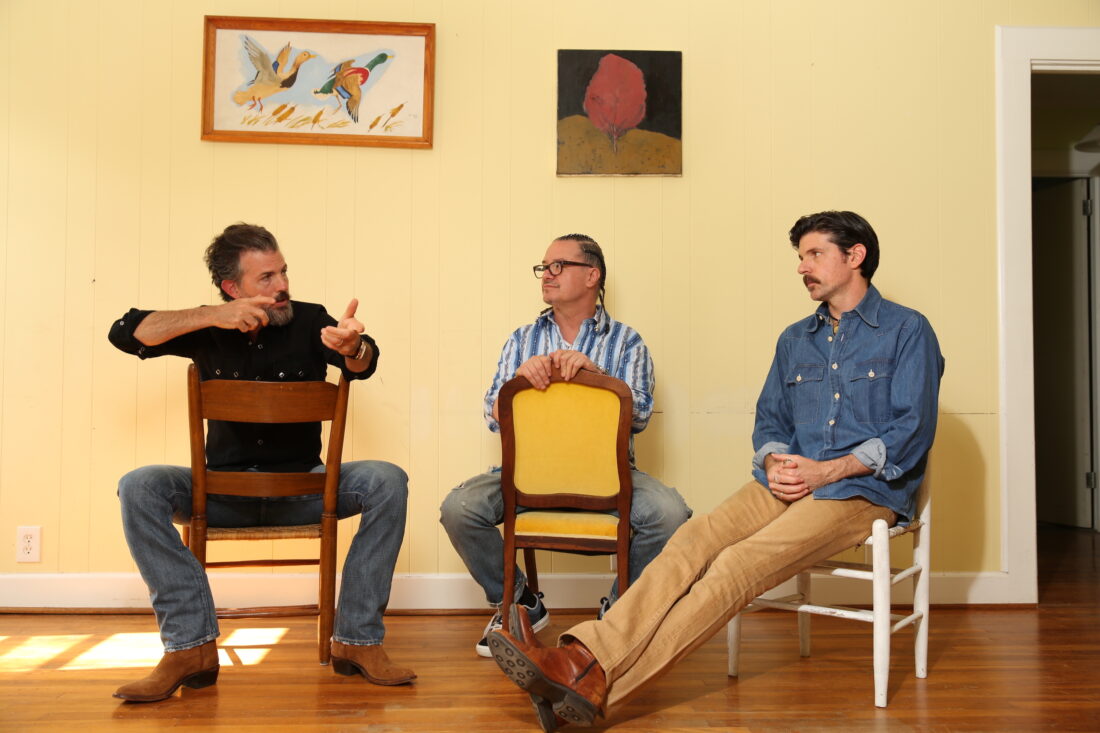
Mike, had you been a fan of the Avett Brothers before you met?
MP: Oh yeah. They had always mystified me, as if I heard old souls in their music, and there was adventure in there. There was an amusement park element to it. It intrigued me, and it was deceptively simple: sparse elements, great songwriting, but a lot going on. And so in the beginning stages, it was like, how do I jump into a set of music with a set of brothers? How can I blend my voice and my leanings into this? It was very delicate at first, and then once I found it, it was unfiltered.
How did the songwriting process work? Was it all remote?
SA: It was all remote. There was no direction for Mike, only how he could make it better. Mike would move a verse, sing a verse, or take it out completely. Things changed all the time. And then we sent them to Seth and told him to do what he thinks will elevate this. [In person], we probably would have been much more diplomatic among the three of us and probably the rest of our musicians as well in our group. But it’s really good that we did it this way; the three of us benefited from it.
Mike, how did your end of the creative process work?
MP: I played around a lot with adding and experimenting with instrumentation. You know, a church organ here, a zither there. There are things that, in theory, don’t belong, like timpani or orchestral pieces. But once I realized how well those actually fit with, say, a banjo, the language just grew. And so I spent a lot more time on instrumentation than I did on the voice. I usually did my voice stuff last. And what I found, at least in the beginning, was that the way these guys harmonized, like I said, I did not want to f*** it up.
How did you know when a song was finished? It seems like you could go back and forth, back and forth.
SA: All three of us have a good history with that. Sometimes we’ve been known to ride that wave over and over and over. Working remotely was beneficial for this because it’s trickier to meddle with things; we would do something, send it, and still manage to adjust very well.
MP: It felt natural. We all just knew. Knowing when something is finished is sometimes the hardest part. It’s funny that Scott talks about getting invited to jams. I’m not really a part of that world at all, but the closest thing that I could relate to is improvising with jazz music. No songs, do anything, one-two-three go. That takes some cojones, man, but it’s amazing, and it really teaches you how to listen and when to shut up. What I learned over the years and was taught by close friends who I would improvise with is that when you find an ending to a piece, grab it. Because otherwise this shit could go on for three hours, and no one wants that.
You have one show booked together in March during the Big Ears Festival in Knoxville. Is there a plan to do any more beyond that, or see how it goes?
SA: Oh, we plan to do more. We should be able to beat this horse to death [laughs]. The relationship with the songs is going to get really interesting when they’re played live. It’s one thing to have recorded versions, but what could get extracted from them live is going to be exciting to see. I’m sure it won’t all be pretty, but we’re very much looking forward to that.
Will you also play each other’s stuff?
SA: We’re talking about it now. We’re trying to get the ship in the right direction, so the waters are open for us.
MP: There are many, many paths we could go down, which is really cool. It would be great to play each other’s stuff. Cover tunes, too. It could even be a jamboree or a full-on revue [laughs]. Who knows?