

This Kentucky Baker’s Hyperrealistic Sugar Flowers Are the Stuff of Wedding Dreams
In Lexington, Kentucky, Alex Narramore nurtures a stunning artist’s garden to create remarkable botanical cakes

Photo: The Budnick Co.
With a paper-thin dahlia sculpted entirely from sugar paste pinched between her fingers, Alex Narramore bends over the worktable in her kitchen. Every few seconds she looks closely at her reference flower—a big bloom from her garden—to get the subtle gradation of color just right as she swirls dry pigment onto a paper-towel palette. After she dusts layers of pale yellow and deep gold onto the sugar petals, it’s difficult to tell which flower Narramore shaped and which started as a seed dropped in the dirt around her Lexington, Kentucky, home.
A single sugar flower may require up to a week on Narramore’s table and then months in holding before she arranges a completed bounty of botanicals, which might include layered dahlias, poppies, and vines heavy with blackberries, on a wedding cake. Glass vases of roses, lilies, and alliums, all picked from her garden, stud Narramore’s counter alongside dozens of their sugar-made counterparts, identical down to the stamen. “When you grow flowers yourself, you see things you wouldn’t notice if you were just getting flowers from a florist,” Narramore says. “You see the way it actually grows, at all the different life stages.”
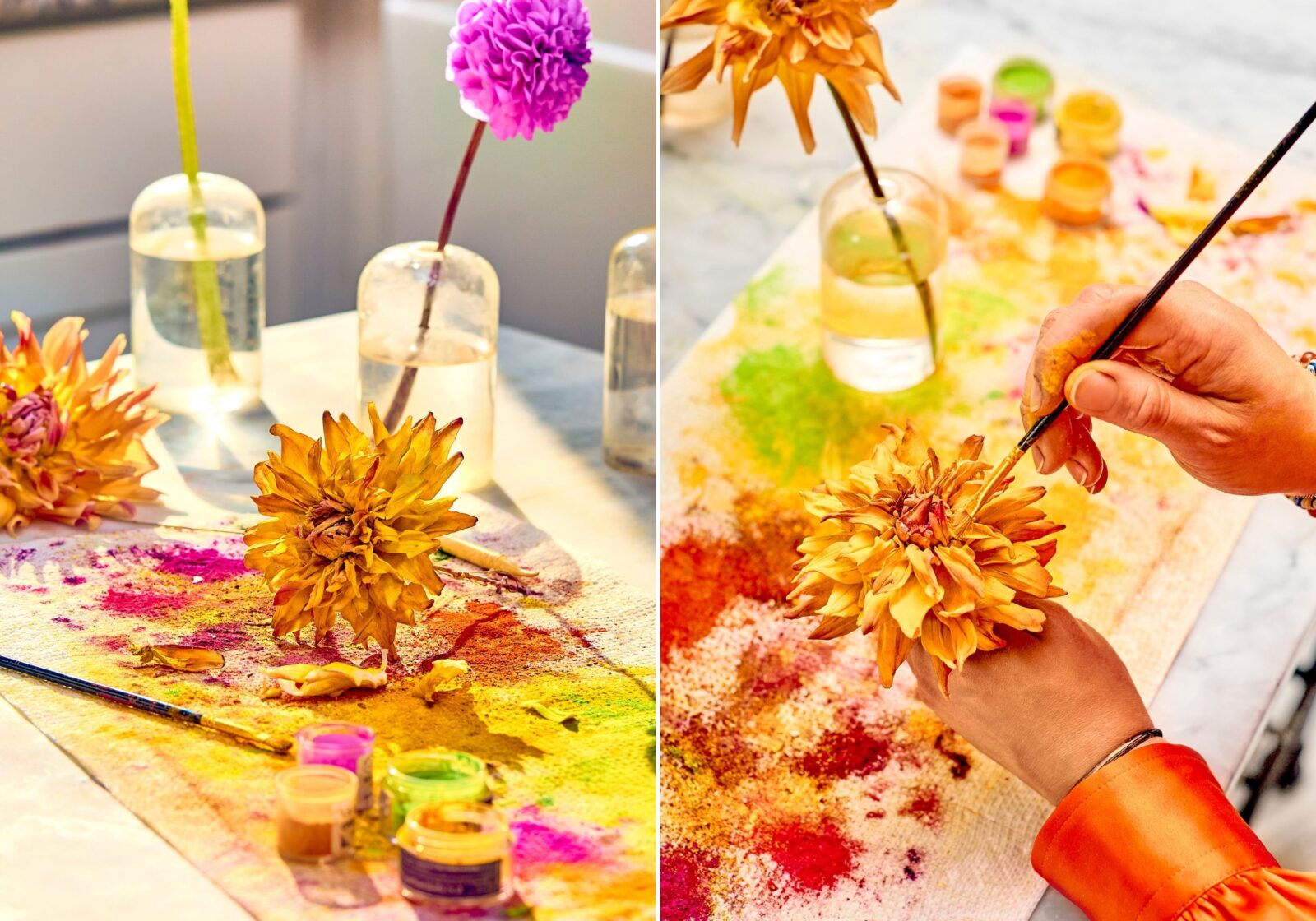
Photo: The Budnick Co.
For each sugar flower, Narramore begins from the center of the bloom and works outward.
Even before Narramore had her fairytale home and artist’s garden in Lexington, she knew she wanted to combine her passion for baking and art. When applying to college, she teetered between three paths: art, business, or culinary school. “I decided to go to art school and teach myself the other two things,” Narramore says. More than fifteen years ago at Alice Lloyd College in Pippa Passes, Kentucky, she accepted her first wedding cake order. “Most people would use the internet to learn, but I was dragging cookbooks back and forth like a crazy person.” One weekend back home in Eastern Kentucky, she eyed her mom’s Sylvia Weinstock book on the kitchen table. The pages of the iconic New York baker’s multi-tiered cakes, wrapped in garlands of hyperrealistic flowers, lit a fire under Narramore. Soon, her mom stepped in to help her execute an ambitious first sugar-flower cake. “We very, very slowly figured it out together.”
Narramore’s practice evolved into a full-fledged cake, pastry, and sugar-flower design studio called the Mischief Maker. She and her mom amped up the detail with every cake, ordering dozens of flowers from florists and leafing through botanical field encyclopedias to source reference models. They measured the dimensions of the sugar flowers with painstaking precision. But Narramore quickly realized she required more readily available blooms if she wanted to keep her work as accurate as possible. “We really need models in front of us,” she says, “to be able to take each piece apart and sculpt them—and preferably multiples—because we tear some of them apart and then we think, Do I even know how this was put together?”

Photo: The Budnick Co.
Narramore in her back garden.
So Narramore leaned into old creative processes from the art world, including working from the inside out. Renaissance painters like Michelangelo and Titian painted exacting human forms with the help of cadavers, studying muscles and bones and attending live public dissections to inform their understanding of anatomy. Likewise, the Kentucky native needed to handle and measure and pick apart her flowers—and watch them bud, bloom, wilt, dry, and self-seed in nature. “The more imperfections the sugar flowers have, the more realistic they are,” Narramore says.

Photo: The Budnick Co.
Wisteria and roses climb on foraged sticks, creating a tunnel of greenery along the side of Narramore’s home; sitting on the side porch. “With the pots overhead, it feels like a conservatory,” Narramore says.
In 2021 Narramore broke into the dirt at her downtown Lexington rental home, tucking poppy, foxglove, and sweet pea seedlings into the soil for a cottage garden. Just as Claude Monet’s Giverny lily pad ponds and Frida Kahlo’s Casa Azul courtyard cacti inspired their artworks, Narramore tended to her own plot, going all in once she purchased the rental house and made it her own. “I usually keep the back kitchen door and the windows open all day so that I can directly interact with the garden as I work,” she says.
Pink hydrangeas, magenta bougainvilleas, and wispy strands of ivy pour over terra-cotta pots on the bright teal steps of her front porch. On the side of her brick home, a pathway leads to a garden gate. “My dad and our family friend brought me branches from Eastern Kentucky,” she says. Together, they bent the tree limbs to create an archway where scarlet runner beans, wisteria, and climbing roses could meander up the wood. “There are things growing on it, so the branch structure comes alive.”

Photo: The Budnick Co.
Potted hydrangeas and ivy sit on the front steps of Narramore’s home in downtown Lexington.
Around the back, “I tried to plant for all of the seasons,” she says. Plumes of ostrich ferns and gold-tinged autumn ferns bestow lushness; climbing English roses, blackcurrants, and raspberry vines bring height and curving lines. In the spring, happy yellow daffodils pop up from the cold ground, and pollinators buzz around clusters of mountain mint, a “very Eastern Kentucky” plant. Beds of tomatoes and herbs supply fresh-for-picking lunches. But her dahlias, with their layered structure and medallion-like faces, are her prized possession. “They’re so beautiful to me, and I love to cut them and bring them in,” she says.
These days, Narramore blends her own collection and vision with the desires of her cake clients, who sometimes share moodboards but usually give the artist free reign. “I’ll come with my own references, with twenty to a hundred images,” Narramore says, “and they tell me what they connect with.” From there, she sketches out a draft of the design before sitting down with each flower and replicating it with sugar paste, starting with the center and working outward in an additive sculpting process. “If the center is off-balance, you’re in a mess for the whole rest of the thing,” she says. “And when we look at it and see that it has three hundred stamens, we will make them all out of sugar. We don’t omit anything.” After a month of shaping and carefully dusting dry pigment onto the pieces to color them, Narramore and her mom transport each individual sugar flower to the venue and reconstruct the cake. “It turns into a kind of performance art.” Narramore says.
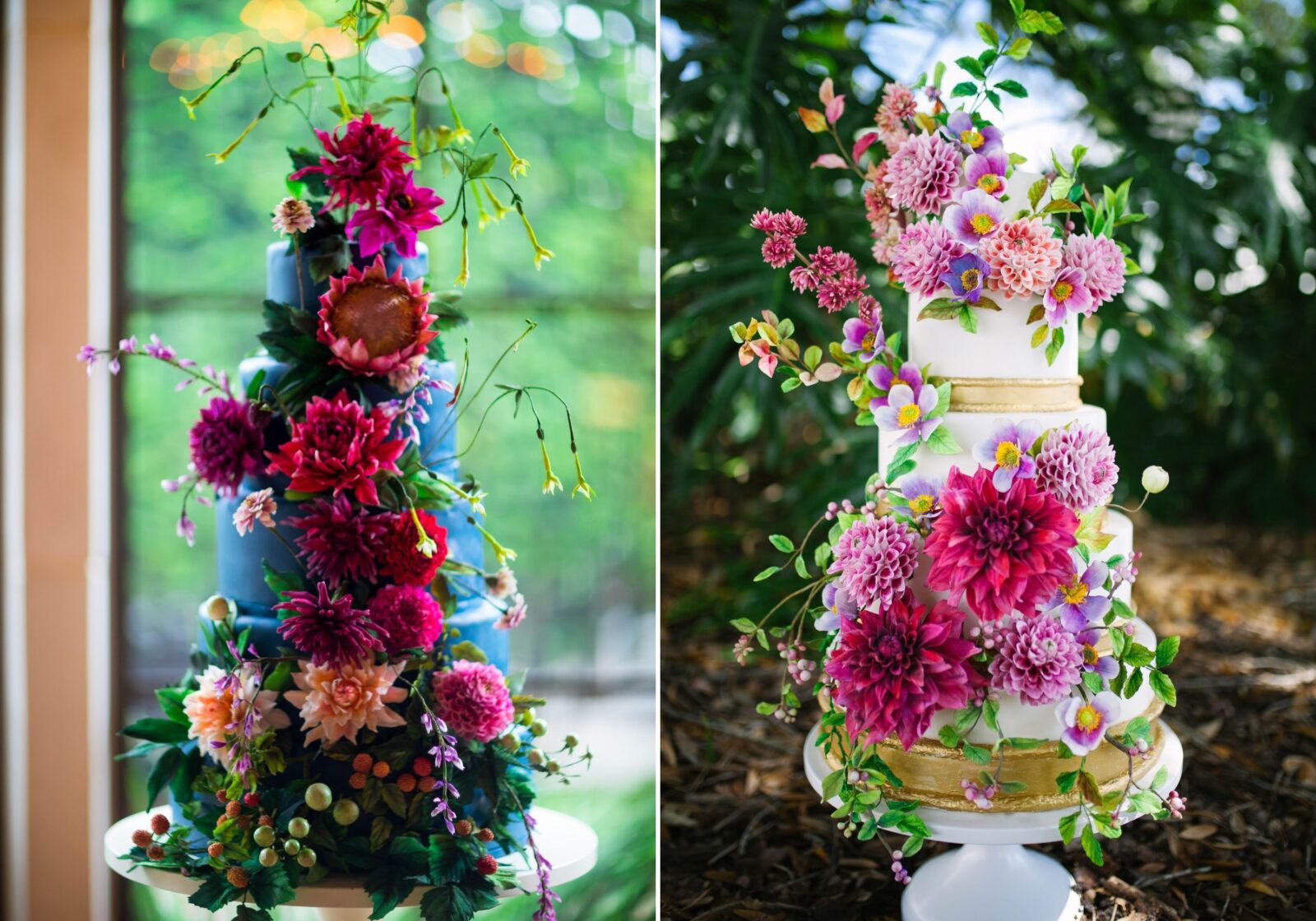
Photo: courtesy of alex narramore
On her cakes, Narramore balances big dahlia blooms with delicate, meandering blackberry vines, blueberry branches, and smaller flowers.
Narramore, who has lived in Kentucky her whole life, feels a constant current of inspiration and beauty in her home state: “I think people in isolated places dream, and they are very open to creativity in that way.” And whether her flowers are just spring buds or have petals that curl and dry in the late-summer sun, her cakes respond to the seasons while participating in a timeless tradition. “For hundreds of years, artists have been painting the same kinds of flowers. They live forever in that way.”
Related Stories:
G&G Presents
Kaleidoscopic glass dinnerware, heritage-inspired button-downs, and this year’s other Southern-crafted honorees embody thoughtful design and innovative techniques worthy of passing down to the next generation
Travel
In a storied King Street building, a new woman-owned shop bolsters the Holy City’s growing literary district
Arts & Culture
In its new space, the bookstore celebrates community and creativity with local art and expanded offerings
Trending Stories:
Land & Conservation
The future of conservation in the South just got a little bit brighter—and not just for salamanders
Land & Conservation
The mounds may look insignificant, but they’re the craftsmanship of local crustaceans called lawn lobsters
Arts & Culture
The drawls are receiving a lot of flak across the internet, but a North Carolina linguist argues they’re actually pretty accurate